Sagging Skin After Weight Loss: Non-Surgical Options in Seoul
This is a subtitle for your new post


Mild to moderate sagging skin after weight loss can often be improved without surgery in Seoul, using a combination of skin tightening devices, collagen stimulators and, in some cases, careful volume replacement. These options firm and smooth loose skin, but they cannot remove large folds of excess skin, which usually need a surgical opinion. A doctor-led consultation in Korea is the best way to find out which group you fall into.
| Best suited to | Mild to moderate laxity of the face, jawline and neck after weight loss |
|---|---|
| Main approaches | RF and ultrasound tightening, collagen stimulators, threads, volume restoration |
| Downtime | None for most devices; a few days of swelling for threads |
| When results show | Some firmness early; main change builds over 2–6 months |
| Not suited to | Large hanging folds of skin, which usually need surgery |
| Key timing advice | Wait until your weight has been stable for several months |
Why skin sags after weight loss
When fat is lost, the skin that stretched over it does not always shrink back. Collagen and elastin fibres may have been stretched for years, and their ability to recoil falls with age, sun exposure and smoking.
In the face, weight loss also removes fat that gave the cheeks and temples their shape. The result is often a mix of two problems: loose skin and lost volume. Some people notice deeper nasolabial folds, jowls along the jawline or a looser neck within months of losing weight quickly.
Telling these two problems apart matters, because tightening alone will not replace lost volume, and volume alone will not firm loose skin.
Are you a candidate for non-surgical treatment?
Non-surgical options work best when the skin is loose but still has some elasticity. A simple sign is whether the skin springs back reasonably well after a gentle pinch.
- Good candidates. Softening of the jawline, early jowls, crepey neck skin, a slightly hollow or deflated mid-face.
- Borderline. Moderate sagging where devices may give a partial result, often combined with threads or volume.
- Usually surgical. Heavy folds of skin, especially on the neck, arms or abdomen after large weight loss.
A responsible doctor will tell you honestly if your expected result from devices would be too small to justify the cost.
Non-surgical options available in Seoul
Radiofrequency tightening
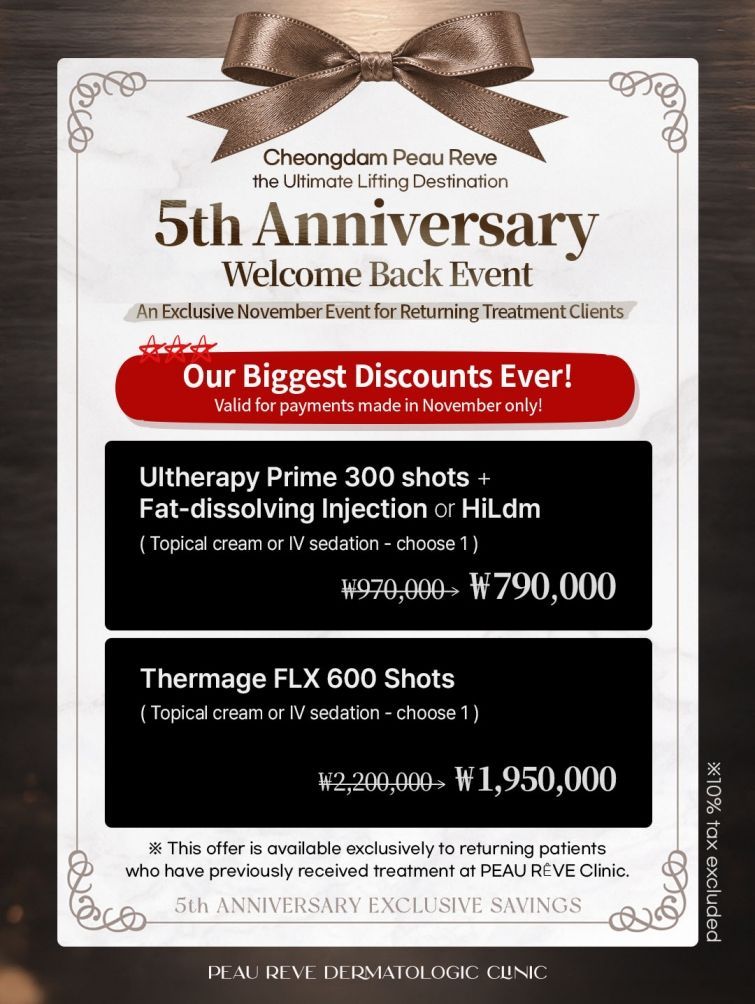
Thermage FLX uses monopolar radiofrequency to heat the deep dermis, tightening collagen at once and stimulating new collagen over 2–6 months. Usually one session a year is enough, with no downtime. Alltite is another RF option for the mid to deep dermis and SMAS, often done in 1–3 sessions as a more budget-friendly choice.
Micro-focused ultrasound
Ultherapy Prime reaches the SMAS layer, the same structural layer tightened in a surgical facelift, and uses real-time imaging to place energy accurately. The lift develops over 2–3 months. It is often used for jowls and under-chin laxity.
Fat-layer contouring
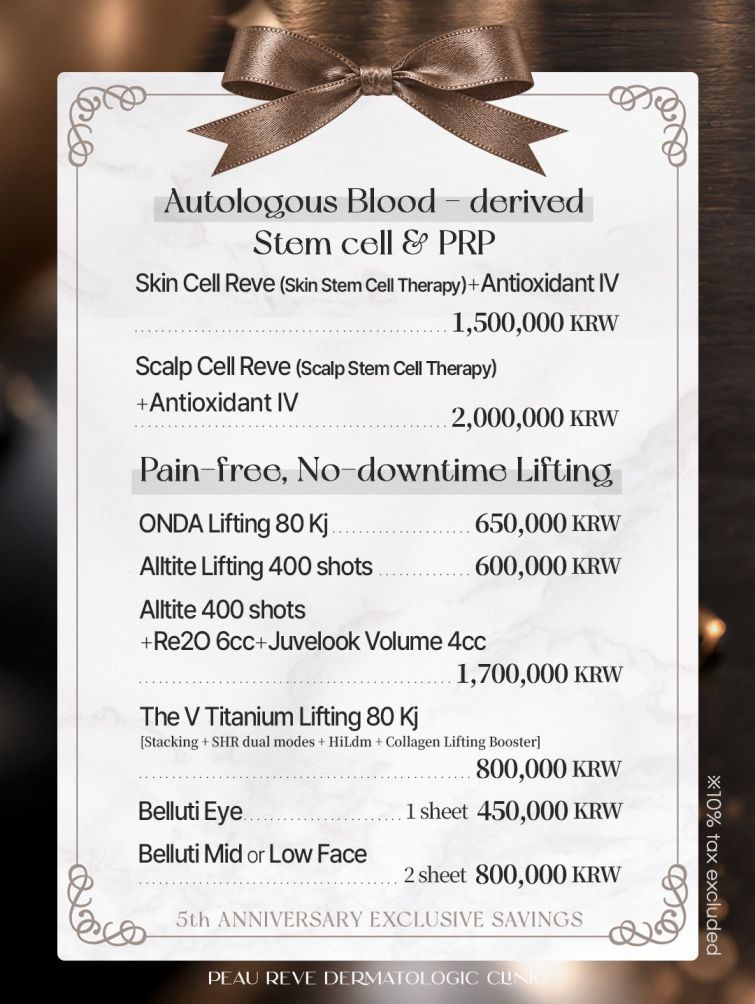
If some stubborn fat remains under the chin or along the lower cheeks, ONDA Lifting uses focused microwave energy to target the fat layer and lower dermis. This can sharpen the jawline while the skin above is tightened with RF or ultrasound.
Threads
PDO thread lifts use absorbable barbed threads to give a visible lift at once, with swelling for 3–7 days. They are useful when sagging is more noticeable and you want a quicker mechanical lift alongside collagen support.
Collagen stimulators and volume
Sculptra (PLLA) and Juvelook (PDLLA with HA) gradually rebuild support under the skin over several sessions. HA fillers can restore specific hollows in the cheeks or temples. Used conservatively, these help the deflated look that tightening devices cannot fix.
Building a realistic treatment plan
Most people with weight-loss laxity do best with a combination rather than one treatment. A typical plan might look like this:
- Assessment. The doctor maps where skin is loose and where volume is missing.
- Structural tightening. Ultherapy, Thermage or both, often in the same visit.
- Contouring or lift. ONDA for residual fat, or threads for a more visible lift.
- Support and quality. Collagen stimulators or skin boosters over the following months.
Spacing matters. Volume is usually added carefully so the face does not look overfilled, and the doctor will decide the order based on your skin.
Typical prices in Cheongdam, Seoul
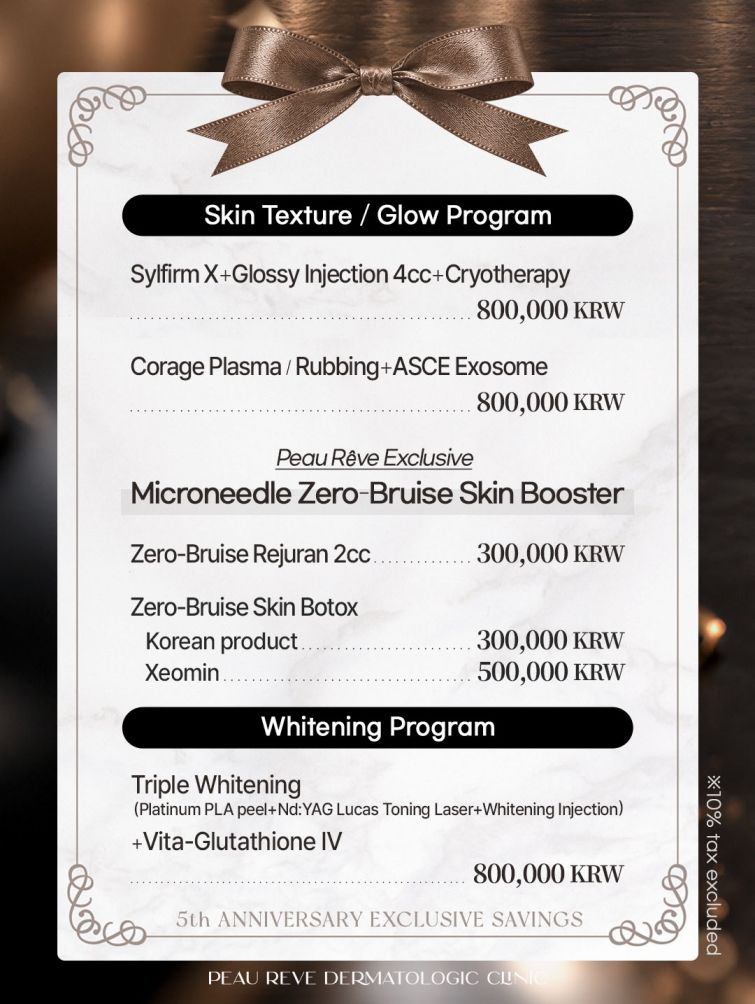
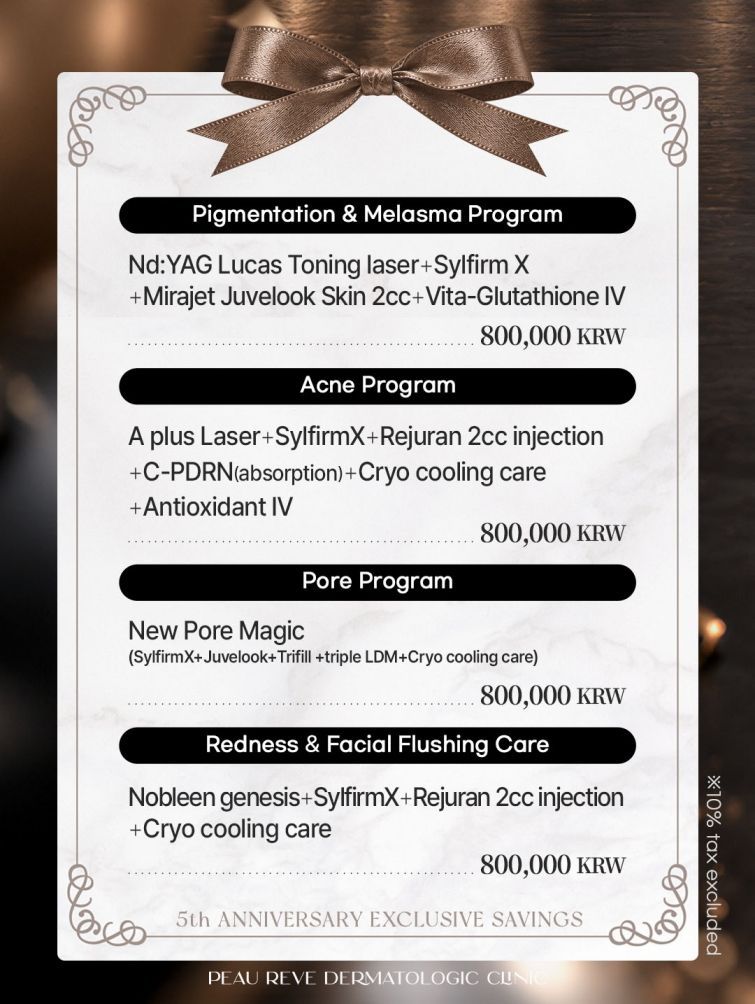
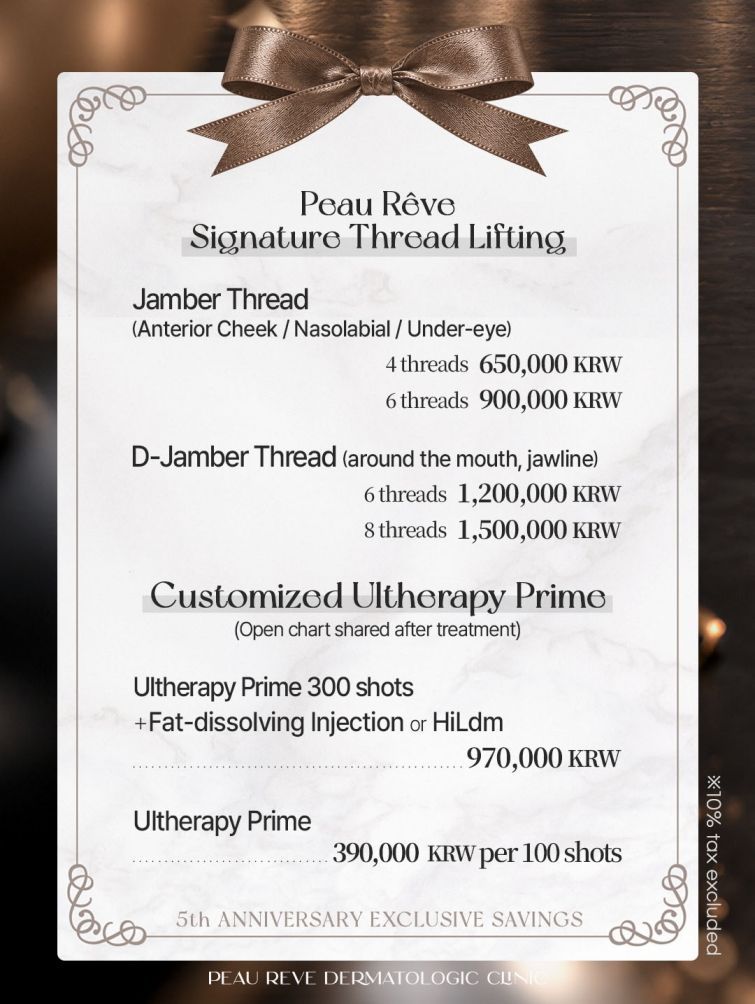
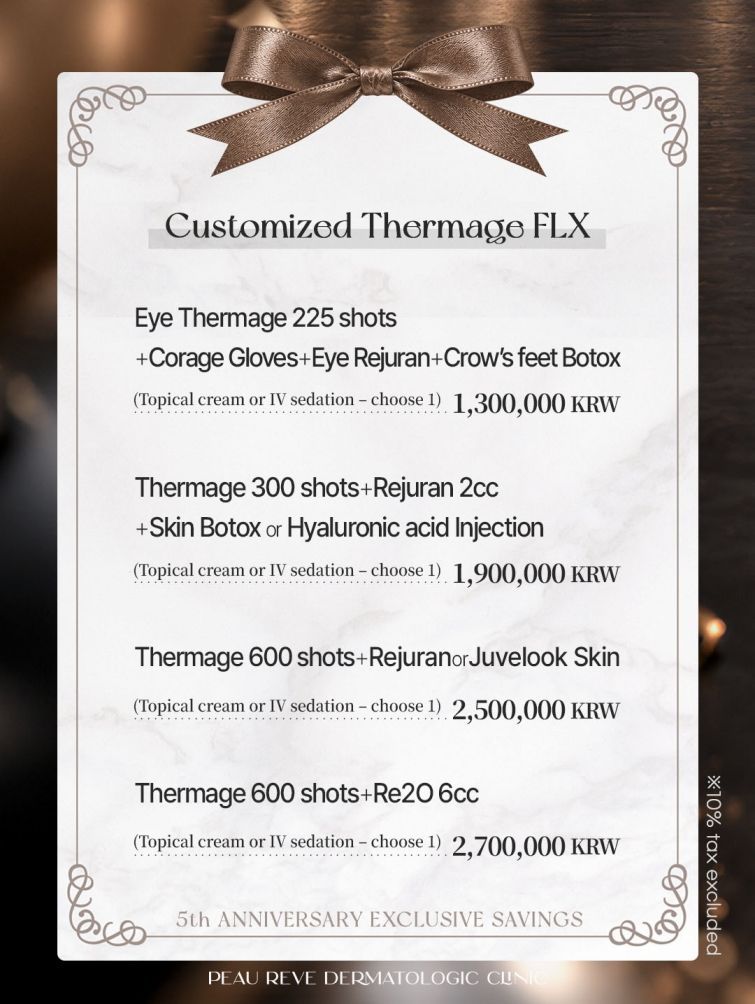
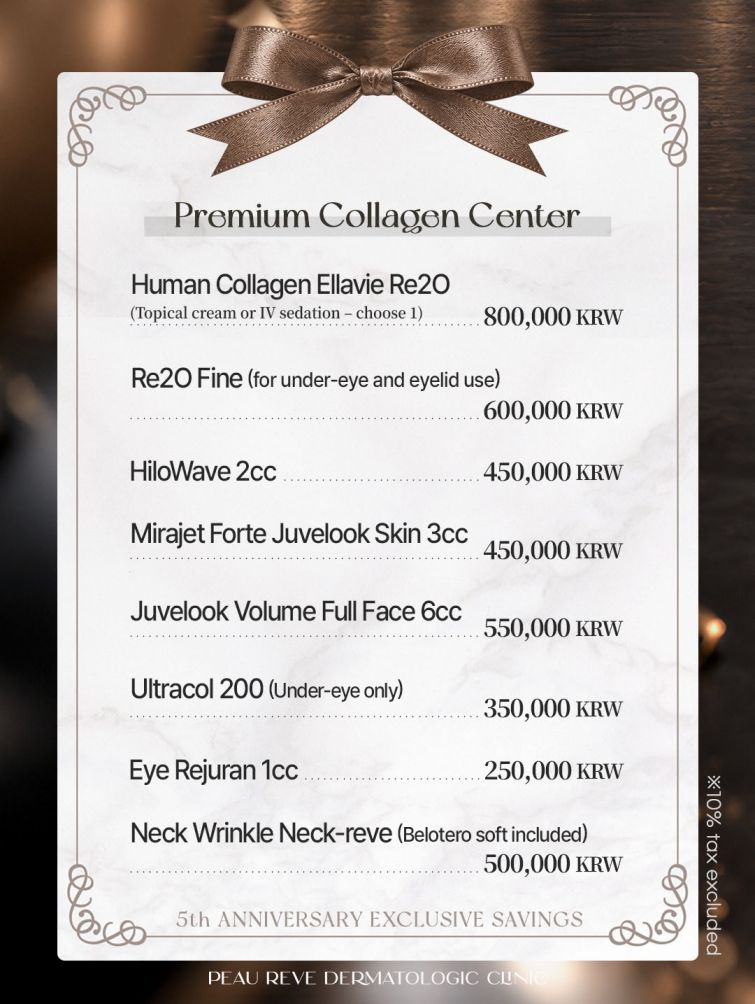
Published prices at Cheongdam clinics start around ₩390,000 per 100 shots for Ultherapy Prime and ₩1,300,000 for a Thermage FLX package including a booster. Combination packages such as Ultherapy 400 shots with Thermage 600 shots are published at around ₩3,390,000. ONDA starts around ₩650,000, Alltite around ₩600,000 and thread lifts around ₩650,000.
These are starting prices excl. 10% VAT, as of late 2026, and are usually the same for foreign visitors. Your total depends on the number of areas and shots, so check current prices at your consultation.
How to choose a clinic in Korea for loose skin
- Doctor-led planning. The doctor who assesses you should explain why each step is chosen, and ideally perform the treatment.
- Honest candidacy advice. Be cautious of a clinic that promises to fix heavy sagging with devices alone.
- Genuine tips and cartridges. Ask to see sealed Thermage tips and Ultherapy shot counts before treatment.
- Transparent pricing. Published prices, clear shot counts and the same price for foreigners.
- English support and follow-up. Make sure you can reach the clinic after you return home.
Supporting your results at home
Keeping your weight stable is the single most useful thing you can do, since further large changes can undo progress. Daily sunscreen, adequate protein, not smoking and a simple skincare routine with a moisturiser all help the skin hold its collagen.
Results vary, and natural ageing continues. Many people plan yearly maintenance with a tightening device.
Frequently asked questions
How long should I wait after weight loss before treatment in Seoul?
Many doctors suggest waiting until your weight has been stable for several months. Treating while you are still losing weight can mean paying for results that change again.
Can Ultherapy or Thermage fix loose skin after rapid weight loss?
They can firm mild to moderate laxity and are often combined. They cannot remove large amounts of excess skin, which usually needs a surgical consultation.
Does weight loss medication cause facial sagging?
Any fast weight loss, from medication, diet or surgery, can reduce facial fat and make skin look looser. The treatment approach is the same: assess both laxity and volume loss.
Is there downtime with non-surgical lifting in Korea?
Most tightening devices have no downtime. Thread lifts usually involve 3–7 days of swelling, and injectables may cause minor bruising.
This article is general information and not medical advice. Results vary between individuals. Speak to a qualified doctor about whether a treatment is right for you.