What Does Thermage FLX Feel Like? Pain, Numbing and Sedation Options in Seoul
This is a subtitle for your new post

Thermage FLX feels like a series of short, deep pulses of heat, each lasting a second or two, followed by a cooling sensation. Most people rate it as uncomfortable rather than painful, and numbing cream plus the tip's built-in cooling and vibration keep it manageable. Many clinics in Seoul also offer sedation for full-face or combined treatments if you are worried about discomfort.
| Typical sensation | Brief deep heat, then cooling, with light vibration |
|---|---|
| Most sensitive areas | Jawline over bone, temples, forehead, near the nose |
| Standard comfort | Numbing cream applied before treatment |
| Extra options | Sedation at some clinics, mainly for larger areas |
| Adjustable during treatment | Yes, energy level can be changed pulse by pulse |
| After treatment | Mild warmth and redness, usually gone within hours |
What each pulse actually feels like
Each time the tip is pressed against the skin, radiofrequency energy heats the deeper layers for a moment. You feel a building warmth that peaks quickly, often described as a hot flash or a quick pinch of heat under the skin.
Before and after the heat, the tip sprays cooling onto the surface. The FLX tip also vibrates, which distracts the nerves and softens how strongly the heat registers. The whole cycle is over in a couple of seconds, then the tip moves to the next square on the grid.
Because the sensation is deep rather than on the surface, it does not feel like a needle or a sting. People who expect a sharp pain are often relieved; people who expect nothing at all may find it more intense than they imagined.
Why some areas feel stronger than others
Discomfort is not the same across the whole face. Where the skin is thin and sits close to bone, heat is felt more sharply. Where there is more soft tissue, the same energy usually feels milder.
- Jawline and chin. Often the most noticeable area, because the skin lies close to bone.
- Temples and forehead. Thin skin over bone and many nerve endings make pulses feel stronger here.
- Around the nose and upper lip. Sensitive for many people, so doctors may treat it with lower settings.
- Cheeks. Usually the most comfortable area, with more padding under the skin.
- Eyelids. Treated with a separate, smaller eye tip at gentler settings; most people find it tolerable.
- Neck. Generally moderate, though the front of the neck can feel warm and tender.
Numbing cream: the standard approach
Almost every clinic applies a topical anaesthetic cream before Thermage FLX. It is usually left on for a set period, often around 30–60 minutes, then wiped off fully before the grid is marked and treatment starts.
Numbing cream dulls the surface of the skin, but it cannot fully block heat felt in the deeper layers. That is why you will still notice the pulses. Its main benefit is taking the edge off, so the heat feels shorter and less sharp.
Arrive with clean skin and allow enough time for the cream. Rushing this step is one of the most common reasons a session feels harder than it needs to.
Sedation options at clinics in Seoul
Some clinics in Seoul and Gangnam offer sedation for patients who are anxious about pain, or for long sessions such as a full face plus eyes, or Thermage combined with Ultherapy. What is available, and how it is given, differs from clinic to clinic.
What sedation usually means
In a skin clinic, sedation normally means you are relaxed and drowsy, not under general anaesthesia. Some patients remember very little of the session; others stay aware but calm. The type and dose are decided by a doctor after reviewing your health history.
Practical points if you choose sedation
- Fasting. You may be asked not to eat or drink for several hours beforehand. Follow the clinic's exact instructions.
- Medical history. Tell the doctor about medicines, allergies, heart or breathing conditions and previous reactions to sedation.
- Recovery time. Plan to rest at the clinic until you are fully alert.
- No driving. Do not drive or sign important documents for the rest of the day; ideally travel back with a companion.
- Cost. Sedation is often charged separately, so ask whether it is included in the quoted price.
Sedation is optional. Many people complete a full-face session with numbing cream alone and prefer to skip the extra preparation.
Other ways to make treatment more comfortable
- Speak up during the session. The doctor can lower the energy level for a sensitive spot and raise it again elsewhere. A good practitioner will check in with you regularly.
- Ask about short breaks. Pausing between areas gives the skin and nerves a moment to settle.
- Avoid caffeine and alcohol beforehand. Both can make some people feel more on edge or sensitive.
- Think about timing. Some people find their skin is more sensitive around their menstrual period and prefer to book outside that window.
- Breathe slowly. Steady breathing through each pulse helps many patients relax.
Does more pain mean better results?
No. Older versions of Thermage were known for being uncomfortable, and some people still believe that more heat equals more tightening. With FLX, the system reads skin contact and adjusts each pulse, and the doctor sets energy to suit your skin.
Very high energy is not automatically better and can raise the risk of side effects. A well-planned session balances effective heat with comfort, often using more passes at a moderate level rather than fewer passes at a level you can barely tolerate.
What it feels like afterwards
Straight after treatment, the skin usually feels warm and looks slightly pink. This tends to fade within a few hours. Some people notice mild tenderness when touching the jawline, or slight swelling, for a day or two.
There is no wound to care for, and most people return to normal plans the same day, unless they had sedation. Gentle skincare and sunscreen are enough. Avoid saunas and very hot showers for a few days. Any blistering, worsening pain or lasting change in skin feel should be reported to the clinic.
Questions to ask at your consultation in Korea
- Who will perform the treatment? Doctor-led treatment matters, because the person holding the tip controls comfort and settings.
- How long is numbing cream applied? Ask whether the timing is built into your appointment.
- Is sedation available, and what type? Ask who monitors you and whether it costs extra.
- Can I see the sealed tip? Genuine single-use tips should be opened in front of you with the shot count shown.
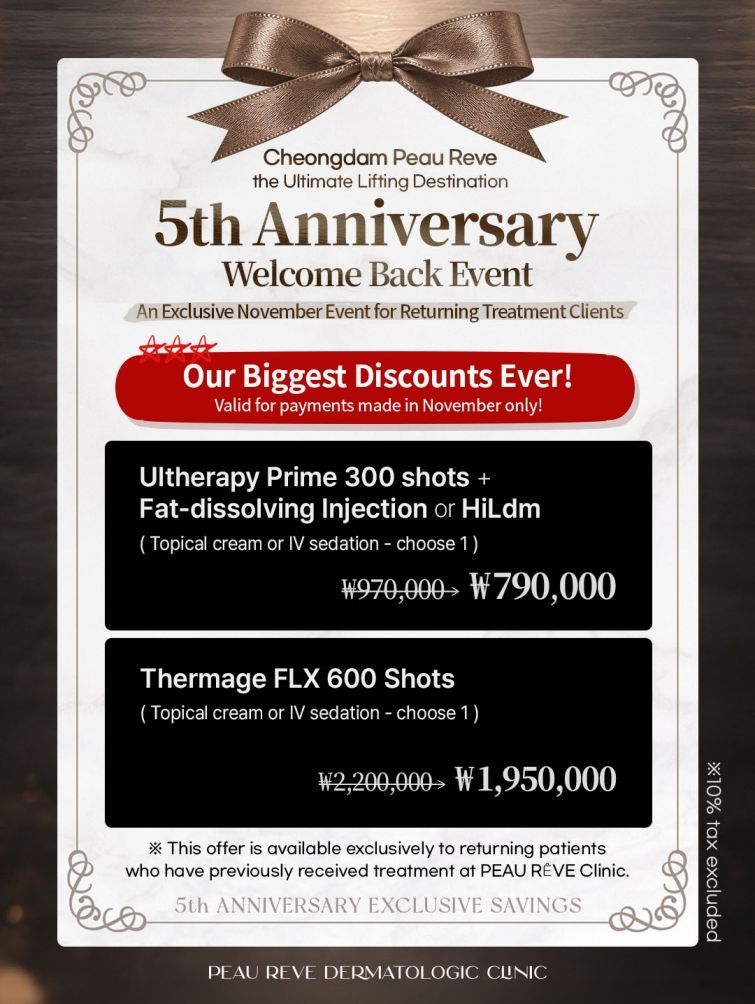
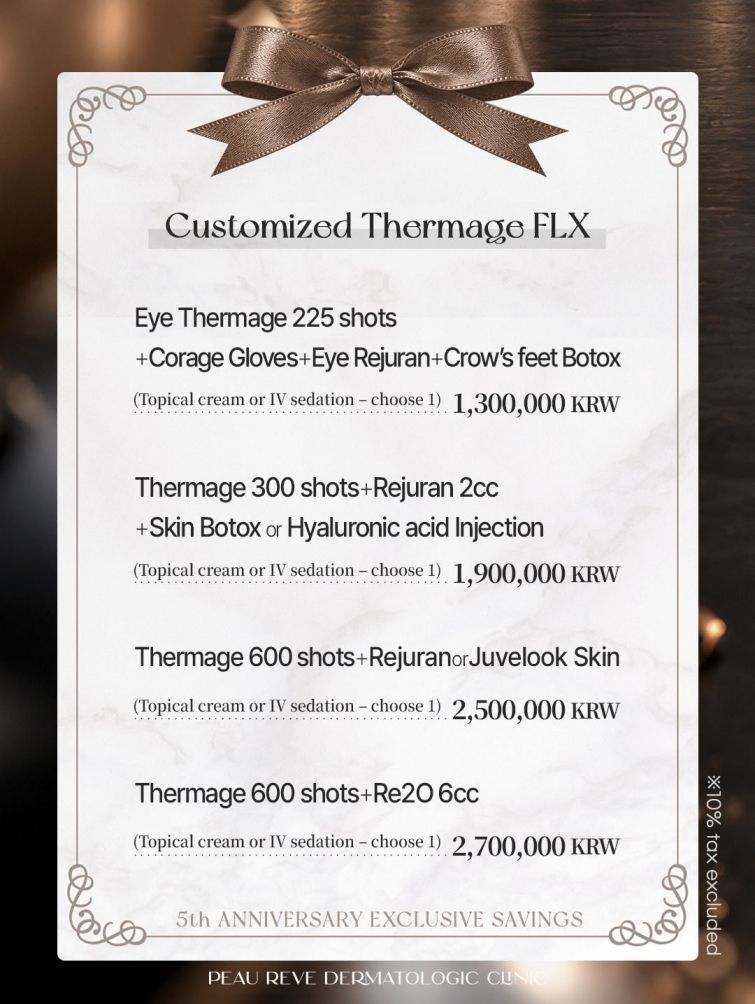
- What is the total price? Published starting prices for Thermage FLX at Cheongdam clinics start around ₩1,300,000 for a package including a booster (excl. 10% VAT, as of late 2026; check current prices). Ask whether foreigners pay the same price and whether English support is available.
Frequently asked questions
Is Thermage FLX more painful than Ultherapy?
Experiences differ. Many people find Ultherapy feels more like a deep ache along the bone, while Thermage FLX feels like quick heat pulses. Both are usually manageable with numbing cream.
Can I have Thermage FLX under sedation in Seoul?
Some clinics in Seoul offer sedation, mainly for larger or combined sessions. A doctor decides whether it is suitable for you, and you will need someone to help you get home.
Does eye Thermage hurt?
Most people find eye Thermage tolerable. It uses a smaller tip at gentler settings, with protective eye shields and numbing cream.
How long does the discomfort last after treatment?
Warmth and redness usually settle within a few hours. Mild tenderness can last a day or two in some people.
This article is general information and not medical advice. Results vary between individuals. Speak to a qualified doctor about whether a treatment is right for you.